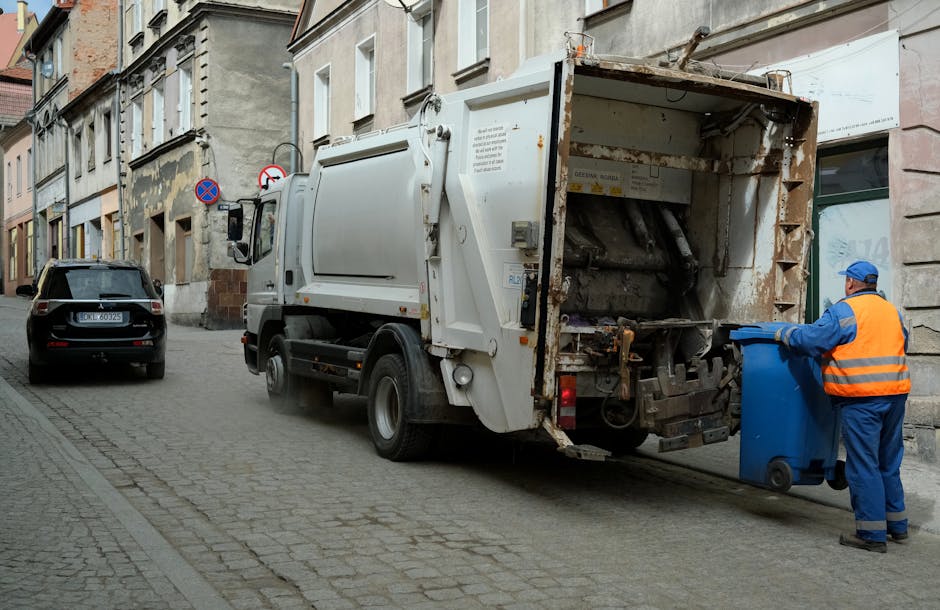
Avoid hidden fees in Lee rubbish removal quotes
If you have ever compared rubbish removal prices and felt that nagging doubt - what exactly am I paying for here? - you are not alone. Hidden charges can turn a fair-looking quote into an irritating surprise once the team arrives, loads the waste, or adds on "extras" nobody mentioned. This guide shows you how to avoid hidden fees in Lee rubbish removal quotes, what to ask before you book, and how to spot a quote that is genuinely transparent rather than just cheap on the surface.
Truth be told, most problems happen not because a company is trying to be awkward, but because the quote was incomplete from the start. A few careful checks upfront can save you money, time, and that awkward driveway conversation at 8:15 on a damp Tuesday morning. Let's make it simple.
Why Avoid hidden fees in Lee rubbish removal quotes Matters
Rubbish removal should feel straightforward: you describe the waste, the provider prices the job, and the waste gets collected. But hidden fees can creep in through the side door. A quote may look competitive until you are told there is an extra charge for carrying items from the flat, parking, heavy lifting, mixed waste, waiting time, congestion, or disposal of specific materials.
In Lee, where homes, flats, narrow streets, shared access, and permit-style parking situations can all affect a job, the details matter more than people think. A quote that ignores access constraints is not really a quote - it is a guess with a price tag attached. And guessing is not a good budgeting strategy, is it?
Transparent pricing matters for more than just saving money. It helps you compare providers properly, avoid disputes on the day, and choose a waste removal service with confidence rather than crossing your fingers and hoping for the best. If you are planning a one-off clear-out, a house move, or a larger job such as a house clearance or office clearance, the difference between a clear quote and a vague one can be significant.
How Avoid hidden fees in Lee rubbish removal quotes Works
There is no magic trick here. Avoiding hidden fees usually comes down to getting the quote based on the real job, not a simplified version of it. A reliable provider should ask sensible questions before pricing, such as what type of waste you have, how much there is, whether it is bagged or loose, where it is located, and whether there are access issues.
A proper quote often considers:
- the volume of waste, usually estimated by load size or how much space it takes in the vehicle
- the type of waste, such as household rubbish, garden waste, furniture, builders waste, or mixed materials
- the time and labour involved, especially if items need carrying from inside the property
- access, stairs, parking distance, or awkward loading points
- any restricted or specialist items that may need separate handling
- the disposal route and any related charges
The more accurate your description, the more accurate the price should be. That sounds obvious, but in practice people often under-describe the job because they want a lower quote. Then they are surprised when the final bill rises. A small pile in the garden can become a van-full once you start lifting the bags. Funny how that happens.
If you are comparing services, it helps to look at the provider's pricing information, such as the pricing and quotes page, and ask for a written breakdown before you agree to anything. For certain jobs, especially bulky household items, you may also want to check related services such as furniture disposal or furniture clearance so you understand how different item types may be priced.
Key Benefits and Practical Advantages
Getting a clear rubbish removal quote is not just about avoiding unpleasant surprises. It actually makes the whole process smoother from start to finish.
- Better budgeting: You know the likely cost before the team arrives, so there is less pressure on the day.
- Easier comparison: Apples-to-apples pricing lets you compare providers fairly, rather than guessing which quote hides the most extras.
- Less conflict: Clear expectations mean fewer awkward conversations over the final invoice.
- Faster decisions: If the quote is complete, you can book sooner and move on.
- More suitable service choice: You can decide whether you need general rubbish removal, garden clearance, builders waste clearance, or something more specific.
There is also a quieter benefit that people sometimes overlook: peace of mind. When you know the pricing structure is transparent, the whole job feels more manageable. You can focus on clearing the space rather than second-guessing the invoice. In a cluttered loft or garage, that matters. A lot.
For property clear-outs, it can also make sense to explore the most relevant service route. For example, waste from a renovation project may be better matched with builders waste clearance, while a home reset may suit home clearance or loft clearance. Matching the service to the job usually reduces the chance of pricing confusion.
Who This Is For and When It Makes Sense
This approach is useful for almost anyone booking rubbish removal in Lee, but some people benefit more than others.
- Homeowners clearing out old furniture, broken appliances, or household clutter.
- Tenants who need a clean, predictable cost before moving out.
- Landlords and letting agents managing turnover between occupiers.
- Flat residents dealing with stairs, shared entrances, or limited parking.
- Businesses removing office waste, stock, or bulky items without disruption.
- Builders and trades who want waste taken away without hidden disposal charges appearing later.
It is especially useful when the job is not tiny. A single bin bag is fairly simple. But once you are dealing with a garage full of old boxes, a garden strip-out, or a post-refurbishment tidy-up, the details start to matter. If the waste is bulky or mixed, the quote should say so clearly.
If your job is commercial, it may be worth reviewing business waste removal or office clearance so you know how business waste is handled and priced. The same goes for outdoor projects, where garden clearance may be more appropriate than a general waste call-out.
Step-by-Step Guidance
If you want to avoid hidden fees in Lee rubbish removal quotes, follow a simple process. No drama, no guesswork.
- Describe the waste clearly. Say what it is, where it is, and roughly how much there is. Mention furniture, soil, rubble, appliances, or mixed rubbish separately if needed.
- Explain access honestly. Note stairs, narrow hallways, shared entrances, parking distance, gates, basement storage, or anything else that could affect loading time.
- Ask what the price includes. Check whether labour, loading, disposal, fuel, parking, VAT, and any call-out fee are included in the amount quoted.
- Ask what could change the price. A good provider should tell you which factors might add cost before they turn up.
- Request the quote in writing. A written message, email, or documented quote is much easier to refer back to than a vague phone estimate.
- Check for excluded items. Some materials may need specialist handling, so it is best to know this early rather than discovering it in the driveway.
- Compare more than price. A very low price with lots of caveats is often more expensive in real life.
A practical example: if you are clearing a two-bedroom flat in Lee, the quote should reflect the real mix of items, whether the property is upstairs, and whether the team will need to carry items past shared areas. If you leave out the stairs, the price may change later. Not wildly, perhaps, but enough to annoy you. And nobody needs that.
For booking confidence, it also helps to read the provider's policies around terms and conditions and payment and security. Those pages often explain how payment is taken, when charges apply, and what happens if the job changes on arrival.
Expert Tips for Better Results
Here are the little checks that tend to make the biggest difference. They are not complicated, just quietly effective.
- Take photos before you request a quote. Good photos from different angles help the provider estimate the job more accurately. A quick phone snap in daylight is often enough.
- Be specific about awkward items. Wardrobes, mattresses, plasterboard, paint tins, soil, fridges, and mixed building waste can all affect the price or disposal method.
- Ask whether the quote is fixed or estimated. Fixed quotes are easier to budget for. Estimated quotes can be fine, but only if you understand the adjustment rules.
- Clarify if VAT is included. It sounds boring, but a quote can look cheaper before tax and then jump at the end. Classic.
- Check for minimum load charges. Sometimes a small amount of waste still has a minimum price attached. That is normal, but it should be obvious.
- Match the service to the job type. A garage full of mixed items may need garage clearance, while heavy domestic items might be better handled through a dedicated collection.
One of the best habits is simply to ask, "What would make this price go up?" That single question often reveals whether the provider has thought the job through. If they answer clearly, that is a good sign. If the answer is vague, take note.
And yes, it is a little annoying to ask ten questions before booking a rubbish collection. But that small bit of effort can save you from a very unfun conversation later on.
Common Mistakes to Avoid
Most hidden-fee problems start with a few avoidable habits. These are the usual suspects.
- Choosing only on headline price. A low opening number can be misleading if the extras are not shown clearly.
- Underestimating the volume. Waste always seems smaller in the corner of a room than it does when someone starts loading it.
- Forgetting access details. Stairs, parking restrictions, and long carries can change the price or the time required.
- Ignoring excluded materials. If the load contains unusual items, the quote should say whether they are included.
- Accepting only a verbal estimate. Verbal quotes can be fine for rough guidance, but they are not ideal when you want certainty.
- Not reading the small print. This is where added charges often hide, quietly waiting like a badly labelled box in the loft.
A common real-world scenario is a customer booking a general rubbish removal job for a flat, then remembering there is also old furniture in the hallway and a few bags in the storage cupboard. Suddenly the initial estimate no longer fits. It is not necessarily unfair for the price to change - but it should have been explained clearly before anyone arrived.
If you are disposing of large household items, the provider may suggest a more suitable route such as furniture clearance or furniture disposal. That kind of guidance is usually helpful, not upselling, provided the reason is clear.
Tools, Resources and Recommendations
You do not need specialist software to avoid hidden fees, but a few simple tools and documents make the process easier.
- Photos or short videos: Useful for showing volume, item type, and access issues.
- A written inventory: Especially handy for flat clearances, office clearances, and bigger domestic jobs.
- Measurements: Door widths, stair turns, or oversized furniture dimensions can be relevant.
- Timing notes: If the collection must happen during a school run, business opening hours, or a parking restriction window, say so early.
- Service pages: Review the most relevant service description before booking, such as flat clearance, home clearance, or waste removal.
One practical recommendation: keep the quote conversation focused on the real job. A provider cannot price what they do not know. If you are honest about the mess - and let's face it, clear-outs are rarely glamorous - you are far more likely to get a fair and stable price.
It can also help to review company information pages for reassurance, especially if you are comparing a few options. Pages like about us, insurance and safety, health and safety policy, and recycling and sustainability can give a better sense of how responsibly a provider works.
Law, Compliance, Standards, or Best Practice
When rubbish removal is handled properly in the UK, there are usually a few compliance expectations in the background. You do not need to become an expert in waste law to book a collection, but you should expect the provider to act responsibly with transport, disposal, and duty of care.
As a customer, the main practical points are simple:
- make sure the provider is clear about what they can and cannot take
- be honest if the waste includes anything unusual or potentially restricted
- ask how they handle disposal and whether any extra charges apply to certain item types
- keep your quote and booking details in case there is any disagreement later
For business customers, compliance tends to matter even more, especially where multiple clearances, paperwork, or site access rules are involved. In those cases, checking the provider's business waste removal approach can be worthwhile. It is also sensible to read the terms and conditions carefully so you know how changes, cancellations, or extra labour may be handled.
Best practice is really just common sense, dressed in a more formal jacket. Be clear. Be honest. Get it in writing. If anything seems unclear, ask again. No one should mind that. In fact, a good provider will usually welcome it.
Options, Methods, or Comparison Table
There are a few ways rubbish removal pricing is usually presented. Each can work, but they are not equally transparent.
| Pricing method | How it works | Pros | Watch out for |
|---|---|---|---|
| Fixed quote | One agreed price based on the described job | Easiest to budget; fewer surprises | Must include all assumptions clearly |
| Estimated quote | Indicative price that may change if the job differs on arrival | Quick to receive; useful for rough planning | Can become expensive if the job was under-described |
| Load-based pricing | Price depends on how much van space the waste takes | Flexible for different job sizes | Ask how volume is measured and what counts as a full load |
| Item-based pricing | Cost is linked to specific items or categories | Good for furniture or bulky item collections | Mixed loads may need extra explanation |
For many customers, a fixed quote is the easiest way to avoid hidden fees. That said, a well-explained estimated quote can also be fine if the provider is upfront about what might change. The problem is not estimation itself - it is vague estimation. There is a difference.
Case Study or Real-World Example
A typical Lee household might need a mixed clearance after a home refresh: an old sofa, a broken chest of drawers, a few bin bags, some cardboard, and a couple of awkward items from the shed. The customer asks for a quick quote over the phone, but forgets to mention the shed contents or that the flat is on the second floor.
At the initial estimate stage, the job looks straightforward. Once the team arrives, it becomes clear there is a longer carry, more volume, and a bit more labour than expected. The final price is still explainable, but the customer feels blindsided because those details were not covered early enough.
Now compare that with a better approach. The customer sends photos, mentions the stairs, lists the items clearly, and asks whether the quote includes loading and disposal. The result is usually a more reliable price, less back-and-forth, and a calmer collection day. Not exciting, maybe, but very effective.
That is the real lesson here: accurate information makes fair pricing easier. It sounds plain, because it is plain. And plain is good when money is involved.
Practical Checklist
Use this checklist before you accept any rubbish removal quote in Lee.
- Have I described all the waste, including bulky or awkward items?
- Have I mentioned stairs, parking, gates, or restricted access?
- Do I know whether the quote includes labour, loading, and disposal?
- Have I checked whether VAT is included?
- Have I asked what might trigger extra charges?
- Have I confirmed whether the quote is fixed or estimated?
- Have I noted any excluded items or specialist materials?
- Have I kept the quote in writing?
- Have I matched the service to the job type, such as garden, garage, loft, or office clearance?
- Do I feel comfortable that the provider has answered questions clearly?
If you can tick most of those boxes, you are in a much stronger position. If a provider seems irritated by reasonable questions, that is information too. Probably not the right fit, to be fair.
Get a free quote today and see how much you can save.
Conclusion
The easiest way to avoid hidden fees in Lee rubbish removal quotes is to treat the quote like a short conversation, not a one-line price. Describe the waste properly, explain the access, ask what is included, and get the details in writing. That alone filters out a lot of problems before they start.
Transparent pricing is not just about saving a few pounds. It gives you confidence, keeps the job moving, and helps you choose the right service for the task in front of you. Whether you are clearing a flat, a loft, a garage, or a mixed household load, a well-structured quote should feel clear from the outset. If it does not, keep asking until it does. You are allowed to.
For more background on the company and the way it works, you may also find about us and contact us helpful when you are comparing options or planning your next step.
And honestly, that little bit of clarity can make the whole day feel lighter.
Frequently Asked Questions
What are hidden fees in rubbish removal quotes?
Hidden fees are charges that are not clearly explained before you book, such as extra labour, access charges, disposal surcharges, parking costs, or fees for certain item types. A transparent quote should make these clear upfront.
How do I know if a Lee rubbish removal quote is genuine?
A genuine quote usually explains what is included, what could change the price, and whether the amount is fixed or estimated. If the provider answers questions clearly and provides the quote in writing, that is a strong sign.
Should I trust the cheapest rubbish removal quote?
Not automatically. The cheapest quote can be a good deal, but only if it includes the same things as the others. Always compare like for like, because a low headline price can hide extra charges later.
What details should I give when asking for a quote?
Give a clear list of items, approximate volume, access details, parking situation, floor level, and whether the waste is mixed or separated. Photos help too. The more accurate the information, the more reliable the quote.
Do rubbish removal companies charge extra for stairs or flats?
Sometimes, yes. Stairs, long carries, and awkward access can increase the labour involved. The key is not whether there is an extra charge, but whether it is explained clearly before the booking is confirmed.
Is VAT usually included in rubbish removal quotes?
Not always. Some quotes include VAT and some do not, so it is worth asking directly. If you are comparing prices, make sure each quote is shown on the same basis.
Can photos help reduce hidden fees?
Absolutely. Photos make it easier for a provider to judge volume, item type, and access. They reduce the chance of a mismatch between the quote and the actual job.
What should I do if the price changes on the day?
Ask the provider to explain the reason clearly. If the job was described accurately and the quote was meant to be fixed, you should challenge any change that seems unfair. Keep the written quote handy.
Are furniture items priced differently from general rubbish?
They can be. Bulky furniture may be handled under a dedicated collection or clearance service, which is why related pages like furniture clearance or furniture disposal can be useful when comparing options.
How can businesses avoid hidden fees on waste removal?
Businesses should give detailed information about waste type, volume, access, timing, and any site restrictions. Reviewing business waste removal and checking the terms in advance helps reduce surprises later.
What is the best way to compare rubbish removal quotes fairly?
Compare what each quote includes, not just the total price. Look at labour, disposal, access assumptions, VAT, minimum charges, and whether the quote is fixed or estimated. That is the fairest way to judge value.
Where can I check the provider's policies before booking?
You can review pages such as terms and conditions, payment and security, insurance and safety, and health and safety policy to understand how the provider works and how charges are handled.
Is it worth asking for a written quote every time?
Yes. A written quote gives you something to refer back to if there is any misunderstanding. It is one of the simplest ways to avoid hidden fees and protect your budget.